Yes, a rigorous reading of the film must accommodate the very real possibility that Ben is innocent of murder and is instead the victim of Jong-su's escalating, class-fueled paranoia. Lee Chang-dong meticulously constructs the narrative to deny us any objective proof of Ben's guilt. Every piece of evidence Jong-su uncovers can be explained rationally through a non-sinister lens. The pink watch in Ben's drawer might belong to another woman, or it could be a different watch entirely, as cheap plastic watches are common. The cat that responds to Boil might simply be reacting to the tone of voice or the food offered, rather than recognizing its name. Ben's confession about burning greenhouses can be read as a metaphorical description of his emotional detachment and his tendency to discard fleeting relationships once he grows bored. By viewing Ben as a monster, Jong-su constructs a classic narrative of good versus evil that gives his own aimless, frustrated life a sense of heroic purpose. He casts himself as the savior of a damsel in distress, ignoring his own past resentment toward Hae-mi. The "aha" is that the film's true horror lies in this unresolved ambiguity: if Ben is guilty, the system has let a predator go free; if Ben is innocent, Jong-su's class rage has curdled into a senseless, tragic act of murder based on nothing but projection.■
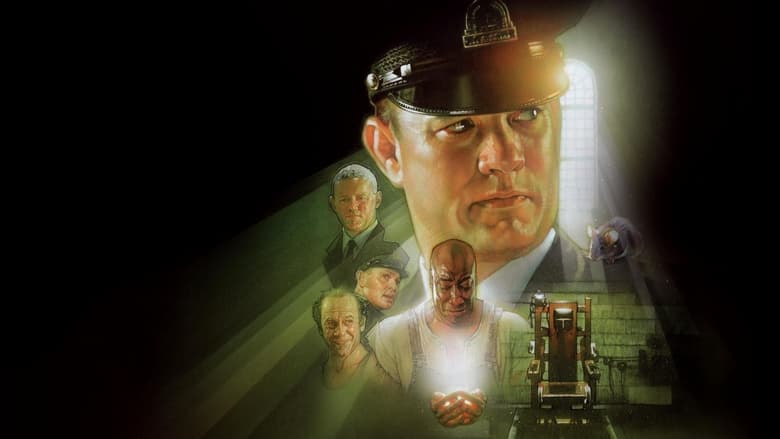
The Green Mile|1999 · Frank Darabont
What is the thematic significance of the green linoleum floor in the prison?
While the green linoleum floor of Cold Mountain Penitentiary is universally understood as a corridor of…